Gardening Services in Elephant and Castle

We provide gardening services in Elephant and Castle for homes, rented properties and shared outdoor spaces that need regular attention or a one-off reset. Our work covers practical garden care that keeps borders, lawns, hedges and access areas in better order, with clear attention to how each space is used. If you need a tidy-up after a busy season or a planned programme of upkeep, we can support a neat, workable result.
The service can include garden maintenance, lawn care, hedge trimming, light planting support and clearance of green waste from routine jobs. We also handle larger seasonal tasks where a garden has become overgrown or needs cutting back before it can be used properly again. For a broader view of the work we offer, see our services overview and choose the option that matches the condition of your outdoor space.
To begin, tell us what type of garden you have, what needs attention and whether you want a single visit or continuing maintenance. A simple description is usually enough to start a conversation, and photos can help us understand the scale of the work more quickly. If you already know the main priorities, mention those first so we can focus on the tasks that matter most.
Regular garden maintenance and seasonal care
Regular maintenance is often the best way to keep a garden manageable without letting small jobs build into larger ones. This can involve mowing, edging, light pruning, deadheading, weeding and clearing fallen material so the space stays usable. Our approach is practical rather than decorative: we aim to leave the garden tidy, accessible and ready for normal day-to-day use.
Seasonal work is just as important in a busy urban setting, where weather, shade and limited access can affect how quickly growth develops. Spring tidy-ups may focus on cutting back winter damage and restoring shape, while later visits may concentrate on keeping growth controlled and making paths, bins and seating areas easier to reach. If you want to compare routine options with other garden work, our garden maintenance page gives a clearer picture of the kind of upkeep involved.
What routine care can include
Routine visits are usually built around the condition of the garden rather than a fixed checklist. Depending on the space, that may include trimming edges, lifting debris, tidying beds, reducing light overgrowth around fences and checking that lawns or planted areas are not being crowded out. Where the garden has mixed use, we can focus more attention on the parts that affect access and everyday enjoyment.
Lawn, hedge and border work

Lawns, hedges and borders often need different techniques, so the work is best planned by area rather than treated as one task. Lawn care may involve careful cutting, edging and clearing of clippings. Hedge trimming needs more control and attention to shape, especially where boundaries, windows or neighbouring access points are nearby. Borders may need weeding, cut-back work and light reshaping to bring plants back into balance.
Where hedges have grown too dense or untidy, trimming can improve both appearance and manageability without necessarily removing the planting entirely. The aim is usually to make the line of the hedge clearer, reduce excess spread and leave it easier to maintain later. If hedge work is part of the job, our hedge trimming page is the best place to look for that specific service.
Different garden features can be combined in one visit if that is the most sensible way to complete the work. For example, a lawn cut may go alongside border tidying and hedge reduction, particularly where the same growth is affecting several areas at once. Keeping those tasks connected helps the final result feel coherent rather than piecemeal.
Garden clearance for overgrown outdoor spaces
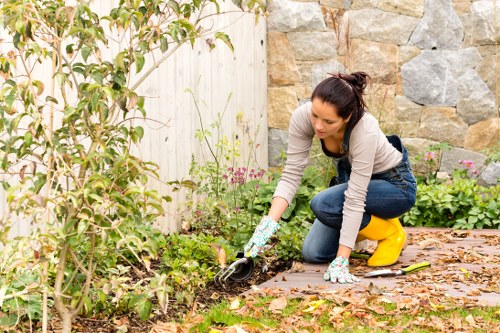
When a garden has become cluttered or heavily overgrown, a clearance visit can create a more workable starting point. This type of work is useful where fallen branches, thick weeds, broken pots, cuttings or neglected growth are limiting how the space can be used. We clear what can be removed as part of the agreed job and leave the remaining garden in a more ordered state.
Clearance work is often a practical first step before ongoing maintenance, landscaping or planting adjustments. It can reveal the real shape of the garden, show where light falls and make it easier to decide what should be kept. For a focused look at this kind of work, our garden clearance page explains the service in more detail.
- removal of loose green waste from routine garden work
- cut-back of unmanaged growth around borders and fences
- tidying of accumulated debris before follow-on work
- preparation of outdoor areas for maintenance or replanting
Landscape gardening and layout improvements
Landscape gardening goes beyond simple upkeep and focuses on how a garden is arranged, used and experienced. It may involve reshaping planting areas, adjusting lines between lawn and border, improving access paths or introducing features that make the space feel more balanced. The exact scope depends on the site, but the aim is to create a garden that is easier to understand and more practical to maintain.
Some gardens need only modest changes, while others benefit from a clearer reorganisation of the available space. This can include removing awkward growth, opening up a view, redefining edges or changing the relationship between paved and planted areas. Our landscape gardening page is useful if you are looking at structural changes rather than simple cutting and tidying.
Good layout work pays attention to proportion, access and the amount of upkeep a garden is likely to need later. A well-considered arrangement can reduce awkward corners, make planting more coherent and help a small outdoor area feel less crowded. It is often the right choice where a garden has become patchy or difficult to read as a whole.
Decking care and surrounding garden features

Decking can be part of a garden’s usable space, so it often needs to be considered alongside the planting around it. The work may involve clearing nearby growth, reducing encroachment from beds or trimming back branches that make the area feel closed in. When the surrounding garden is brought into better order, the deck or terrace is usually easier to use and keep clean.
We also consider the relationship between decking and the rest of the garden, including paths, seating spaces and access routes. Where the ground around a deck has become uneven with weeds or debris, the surrounding area may need attention before the surface itself can feel properly integrated. If decking is central to your plans, our decking services page gives a better sense of the available work.
Some customers want the garden to support leisure and everyday use rather than just look neat from a distance. In that case, practical finishing details matter: clear edges, safe movement between spaces and a tidy transition from hard surface to planting. Those small improvements can make the whole outdoor area feel more intentional.
Tree work, access and careful reduction
Tree-related work needs a measured approach because branches, canopy spread and nearby structures all affect how it should be carried out. Depending on the tree and the condition of the garden, the work may involve cutting back selected growth, improving clearance around paths or reducing the way a tree is encroaching on fences, sheds or neighbouring areas. The objective is to make the space safer and easier to manage without losing the character of the planting.
Some jobs are straightforward reductions, while others require more careful judgement about what should stay and what should be removed. Overly heavy cutting can change the look and balance of a garden, so the work is best planned with the end shape in mind. For more detail on this type of task, our tree lopping and removal page covers the relevant service area.
Tree work can also affect light levels, access and the way other plants perform nearby. When branches are lifted or thinned appropriately, lower planting may recover better and paths can feel less enclosed. In gardens with limited room, that adjustment can be important even when the tree itself remains in place.
About Elephant and Castle
Elephant and Castle is an inner area in south London, located in the London Borough of Southwark and closely associated with the wider North and South London routes that meet there. The name is long established and appears in records connected with the area’s historic coaching and commercial role. Over time, the district has changed from a traffic-heavy interchange and local shopping centre into a mixed urban quarter with ongoing redevelopment, residential growth and better public space connections. The road layout remains a defining feature, with major routes crossing near the centre and making the area feel busy and layered rather than purely residential. The Underground station and nearby rail links have long made it a well-connected part of the city, and that transport importance has influenced the pattern of building and movement around it. The modern skyline includes newer residential towers alongside older streets, while nearby institutions and cultural spaces contribute to a varied streetscape. Local landmarks include the shopping and transport nodes associated with the Elephant and Castle junction, and the wider setting includes the presence of St George’s Cathedral to the west and Burgess Park to the south-east. As with many central south London districts, the area reflects repeated change: nineteenth-century expansion, twentieth-century traffic planning, post-war redevelopment and more recent regeneration. That mix gives Elephant and Castle a distinct urban character, with layers of history visible in the roads, buildings and public realm rather than in one preserved historic core.
Planning the right level of garden work
Choosing the right level of work depends on what your garden needs most: a tidy finish, a return to basic order or a more ambitious change in structure. Some customers want a one-off visit to bring the space back under control, while others prefer a recurring plan that prevents the same problems from returning. We can discuss both options and shape the job around the garden rather than forcing it into a fixed pattern.
It is often helpful to think in terms of priorities. A lawn that needs cutting, a hedge that has outgrown its line and a border full of weeds do not always require the same amount of effort, so identifying the main issue first makes the work easier to organise. If the garden has several pressure points, mention the most urgent ones and then the additional tasks you would like considered.
When you are ready to move forward, request a quotation based on the work you actually need rather than a generic description. For a direct enquiry about costs and the next available step, use our pricing and quotes page.
Service details and practical preparation
A clear enquiry helps us understand the size of the garden, the type of work involved and any access points that may matter on the day. If the space includes narrow side passages, shared entrances or areas with limited parking, it is useful to mention that early. The more precisely you describe the condition of the garden, the easier it is to match the right level of service to the job.
For many visits, the only preparation needed is to make the main working area accessible and identify any items you would like left untouched. If there are fragile pots, loose fixtures or planted areas that should be protected, point them out before the work begins. You can also use our contact us page when you are ready to send the details and ask for a quotation.
We keep the process practical: describe the garden, note the tasks you want completed and say whether you prefer a single visit or recurring attention. If you have a deadline connected to a move, tenancy change or seasonal event, include that as well so the work can be considered in the right context. Clear instructions usually make the result better.
Supporting garden results over time
Well-managed gardens are usually the result of regular, sensible attention rather than one dramatic intervention. After the main work is done, smaller follow-up visits can help preserve the gains made by clearance, pruning or reshaping. That may mean keeping hedges within bounds, stopping lawns from becoming uneven and removing fresh growth before it starts to crowd paths or beds.
Where a garden is shared between different users, consistency matters even more because the space needs to stay readable and easy to use for everyone. A steady maintenance pattern can reduce the need for repeated heavy cutbacks and keep the outdoor area looking intentional. If you want to review broader options before deciding, our landscaping page sits alongside the more maintenance-focused services.
Good garden work should feel considered as well as tidy. That means leaving boundaries clear, avoiding unnecessary disturbance and making sure the completed job fits the character of the space. Whether the work is simple or more involved, the outcome should make the garden easier to enjoy and simpler to look after.